
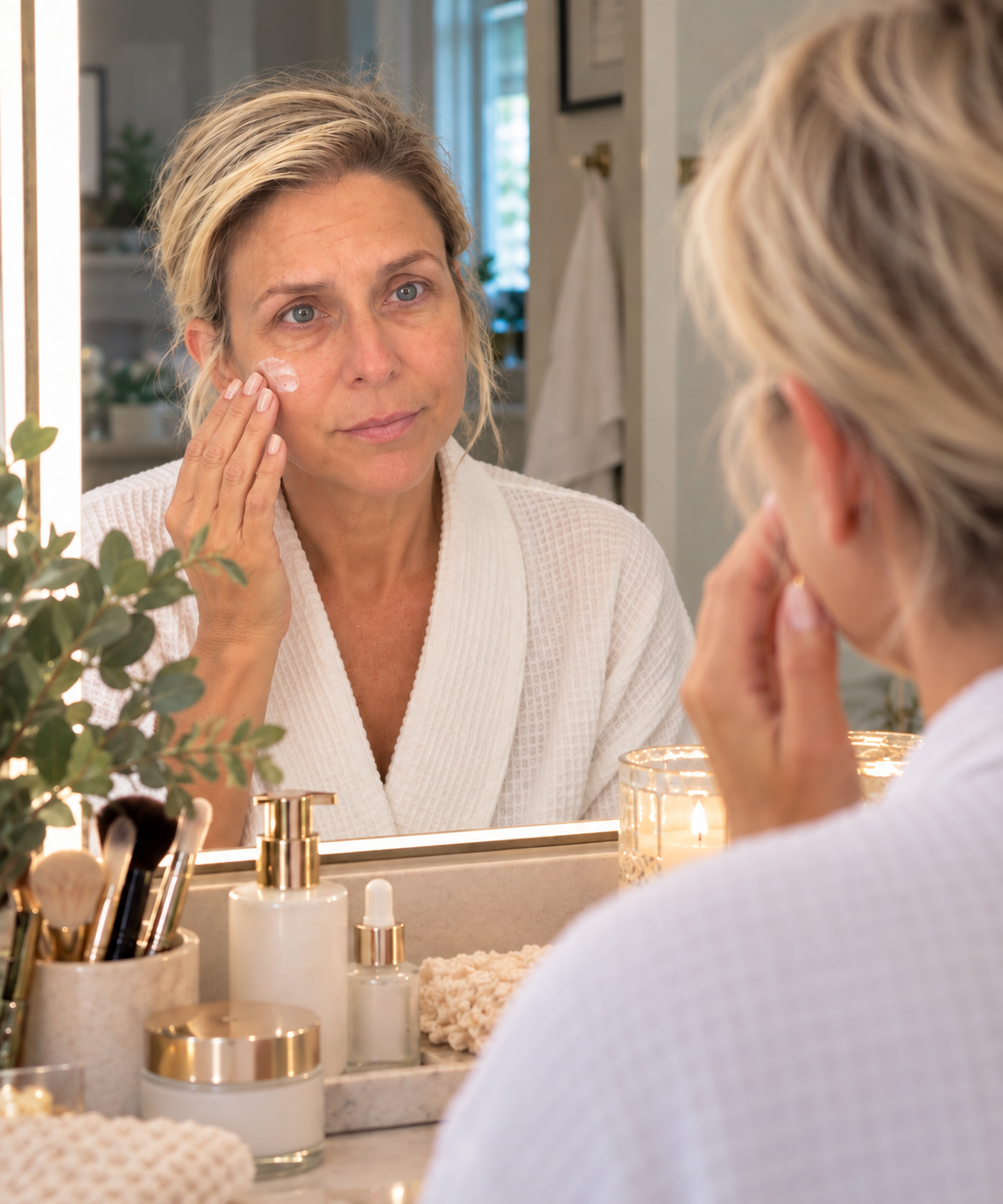
Cooler weather has a way of exposing every weakness in a skincare routine. Skin that felt perfectly comfortable a few months ago can suddenly feel tight, dry, dull, or more sensitive. And after 50, those changes can become even more noticeable as skin naturally produces less oil and has a harder time holding on to moisture.
I’ve tried a lot of skincare over the years, from expensive department-store brands to much more affordable products. For the past six months, I’ve been using several products from The Ordinary, and my own skin has responded better than I expected. What surprised me most is that some of the least expensive products I’ve tried have become the ones I reach for most often. It reminded me that good skincare is less about the price tag and much more about understanding what your skin actually needs.
Why Skin Gets Drier After 50
Dryness after 50 is not simply a matter of needing a heavier moisturizer. As skin matures, it generally produces less of the natural oils that help keep moisture from escaping. The skin barrier can also become less efficient at holding water, which is why products or routines that worked perfectly well for years may suddenly leave your face feeling tight, flaky, or uncomfortable.
Cooler weather can make that even more noticeable. Lower humidity outdoors, indoor heating, hot showers, and frequent cleansing can all pull additional moisture from the skin. The result may be skin that feels dry even shortly after applying moisturizer.
One useful distinction is the difference between dry skin and dehydrated skin. Dry skin lacks oil, while dehydrated skin lacks water. You can have one or both at the same time. Skin that feels rough or flaky may need more emollient ingredients, while skin that feels tight or looks temporarily crepey may benefit from more hydration and better moisture retention.
The goal, then, is not to pile on as many rich products as possible. It is to support the skin barrier, add water-binding ingredients where they help, and seal in enough moisture to keep the skin comfortable throughout the day.
How to Cleanse Without Stripping Your Skin
Cleansing is one of those steps that seems almost too basic to get wrong, yet it can make a huge difference when skin is already dry. If your face feels tight, squeaky, or uncomfortable immediately after washing, that is usually a sign your cleanser or cleansing routine is removing more than you need it to.
For drier skin, look for a gentle cream, lotion, or hydrating cleanser rather than one designed to leave the skin feeling deeply cleansed or oil-free. Ingredients such as glycerin, ceramides, and squalane can help make cleansing feel less stripping, while strong foaming formulas may be more than some mature skin needs during cooler weather.
Water temperature matters too. Very hot water can make dry skin feel even more uncomfortable, so use lukewarm water and avoid scrubbing with washcloths, cleansing brushes, or anything else that turns washing your face into a small home-renovation project.
You may also find that you do not need a full cleanse twice a day. If your skin is especially dry, rinsing with water or using a very gentle cleanser in the morning may be enough, followed by a more thorough cleanse at night to remove sunscreen, makeup, and the day’s buildup.
If you wear heavier makeup or water-resistant sunscreen, a cleansing balm or oil can be useful as the first step at night, followed by a gentle cleanser if needed. The point is not to leave your face feeling perfectly “squeaky clean.” Comfortable, soft, and clean is the goal.
How to Layer Hydration So It Actually Lasts
Hydrated skin is less about how many products you use and more about putting the right types of products on in the right order. A hydrating serum can add water to the skin, but if there is nothing on top to help hold that moisture in, the effect may not last very long. Think of your routine as adding hydration first, then creating a comfortable layer over it to slow moisture loss.
Start with slightly damp skin rather than waiting until your face is completely dry. After cleansing, gently pat away excess water and move into the rest of your routine while the skin still has a little moisture on it. Applying moisturizer to damp skin helps trap some of that water before it evaporates. Dermatologists commonly recommend this approach for dry skin. American Academy of Dermatology
Step 1: Add Hydration
If you use a hydrating serum, this is where it belongs. Ingredients such as glycerin and hyaluronic acid are humectants, meaning they help attract and hold water at the skin’s surface. You do not necessarily need several hydrating serums layered together. One well-formulated product may be perfectly adequate.
This is also where expensive does not automatically mean better. The ingredient list and how your skin responds matter far more than an elaborate bottle or luxury price tag.
Step 2: Follow With Moisturizer
Moisturizer helps soften the skin and reduce water loss. For drier skin, a cream is often more satisfying than a lightweight lotion, particularly in cooler weather. Ingredients such as ceramides, glycerin, fatty acids, squalane, shea butter, dimethicone, and petrolatum are commonly found in products designed to support dry skin. Mayo Clinic
You do not need to use the richest cream you can find simply because you are over 50. Choose the texture according to your skin, not your birthday. If a heavy cream leaves you uncomfortable or congested, move down to something lighter. If your usual moisturizer disappears within minutes and your skin still feels tight, you may need something richer.
Step 3: Seal Very Dry Areas When Needed
If certain areas remain especially dry, an ointment or petrolatum-based product can be used as a final layer to help reduce moisture loss. This does not necessarily mean coating your entire face in petroleum jelly every night. A small amount over particularly dry areas may be enough.
This extra step can be especially useful around areas that tend to become flaky or uncomfortable in colder weather. If you are acne-prone or sensitive to heavier products, introduce this carefully rather than assuming more is automatically better.
Morning and Night Don’t Have to Look the Same
Your morning routine can stay relatively simple: gentle cleanse or rinse, hydration if you need it, moisturizer, and broad-spectrum SPF 30 or higher as the final skincare step.
At night, you may want a richer moisturizer because you are not layering makeup over it and your skin has hours to sit comfortably with the product. That is also where an overnight mask or more occlusive layer can fit if your skin needs extra help.
The important point is that you do not need seven hydration steps simply because social media has seven hydration steps. If your skin feels soft, comfortable, and hydrated with three products, congratulations, you have successfully avoided turning skincare into a part-time job.
How to Choose a Moisturizer Without Getting Lost in the Ingredient List
Walk into any beauty aisle and you can find moisturizers promising everything short of reversing time. The price can range from less than ten dollars to several hundred, but a higher price tag does not automatically mean better hydration. For dry skin, what matters most is what the formula does, how it feels on your skin, and whether you will actually use it consistently.
A good moisturizer usually combines several types of ingredients that work in different ways. You do not need to memorize an entire chemistry textbook, but understanding a few names can make shopping much easier.
Humectants: Ingredients That Draw in Water
Humectants help attract and hold water in the upper layers of the skin. Common ones include glycerin, hyaluronic acid, urea, and panthenol.
Hyaluronic acid gets most of the publicity, but glycerin is an excellent hydrator and appears in countless effective products at every price point. Marketing departments may find glycerin tragically unglamorous, but your skin does not care whether the ingredient has its own advertising campaign.
Emollients: Ingredients That Make Skin Feel Softer
Emollients help smooth the spaces between skin cells, which can make rough or flaky skin feel softer and more comfortable.
Look for ingredients such as squalane, shea butter, fatty acids, plant oils, and certain silicones. These can be especially helpful when skin feels rough rather than simply tight.
Ceramides: Support for the Skin Barrier
Ceramides are lipids naturally found in the skin barrier. Products containing ceramides can be particularly useful when skin feels dry, sensitive, or easily irritated because they help support the barrier that keeps moisture in and irritants out.
They are not magical, and you do not need every product in your routine to contain them. But they are a very reasonable ingredient to look for in a moisturizer designed for dry or mature skin.
Occlusives: The Final Seal
Occlusive ingredients create a protective layer that slows water loss from the skin. Petrolatum, mineral oil, dimethicone, and some waxes fall into this category.
If your skin is very dry, these ingredients can make a noticeable difference, especially at night. But heavier is not always better. Someone with mildly dry skin may be perfectly comfortable with a cream, while someone dealing with significant flaking may appreciate an ointment or richer balm on certain areas.
Choose the Texture for Your Skin, Not Your Age
There is no rule stating that turning 50 requires surrendering immediately to a jar of the thickest cream in existence.
If your skin feels comfortable with a lighter moisturizer, keep using it. If your face feels dry again an hour after applying it, move toward a richer cream. You may even prefer different textures at different times of year, with something lighter during warm, humid months and a richer formula when the air becomes cooler and drier.
A moisturizer should leave your skin feeling comfortable, flexible, and hydrated, not greasy, sticky, or buried beneath a layer of product.
And Don’t Assume Expensive Means Better
Luxury skincare can certainly be enjoyable, and some expensive formulas are beautifully made. But price alone tells you very little about whether a moisturizer will work for your skin.
A simple, affordable formula with glycerin, ceramides, and a comfortable texture may serve your skin better than a beautifully packaged cream filled with fragrance and an impressive marketing budget.
That has been one of the biggest lessons from my own skincare experimenting: pay attention to how your skin responds, not what the jar costs.
When Your Usual Skincare Starts Feeling Too Harsh
Products that worked beautifully during warmer months may suddenly feel irritating when the weather gets cooler and your skin is already struggling to hold on to moisture.
Retinoids, exfoliating acids, scrubs, and other active treatments do not necessarily need to disappear from your routine, but you may need to use them less often or simplify the rest of your routine around them. If your skin starts burning, stinging, peeling excessively, or feeling persistently uncomfortable, piling more active ingredients on top is rarely the answer.
Sometimes the smartest skincare move is simply to back off for a few days and focus on gentle cleansing, moisturizer, and sunscreen while your skin settles down.
And resist the temptation to exfoliate every dry flake into submission. Dryness and dead skin are not always the same problem, and aggressive exfoliation can leave an already unhappy skin barrier even more irritated.
Where Face Masks Actually Fit
I love a good face mask, but a mask should be considered an extra, not the thing holding your entire skincare routine together.
For dry skin, look for masks described as hydrating, nourishing, or barrier-supporting rather than clarifying or deeply cleansing. Cream masks, gel masks, and overnight sleeping masks can all provide an extra layer of comfort when your skin feels particularly dry.
Ingredients such as glycerin, hyaluronic acid, squalane, ceramides, and soothing emollients are worth looking for. And unless the directions specifically tell you otherwise, there is usually no prize for leaving a mask on until your face has achieved the texture of drywall.
An overnight mask can be particularly convenient because it simply replaces or sits over your nighttime moisturizer. Just remember that a mask cannot compensate for a daily routine that is repeatedly stripping or irritating your skin.
Don’t Stop at Your Face
Your face gets most of the attention, but cooler weather can be equally brutal on the neck, chest, lips, hands, and body.
Bring your moisturizer down over your neck and upper chest rather than stopping abruptly at the jawline. Keep lip balm somewhere you will actually use it, and apply hand cream after washing when your hands start feeling dry.
For the body, moisturizing shortly after bathing while the skin is still slightly damp can help retain moisture. If regular body lotion stops being enough, switch to a creamier formula during the drier months rather than applying layer after layer of something too light.
This does not need to become another elaborate beauty ritual. Put the products where you use them: hand cream beside the sink, body cream near the shower, lip balm in the handbag. Skincare is considerably more effective when you can actually find it.
What I’m Actually Using Right Now
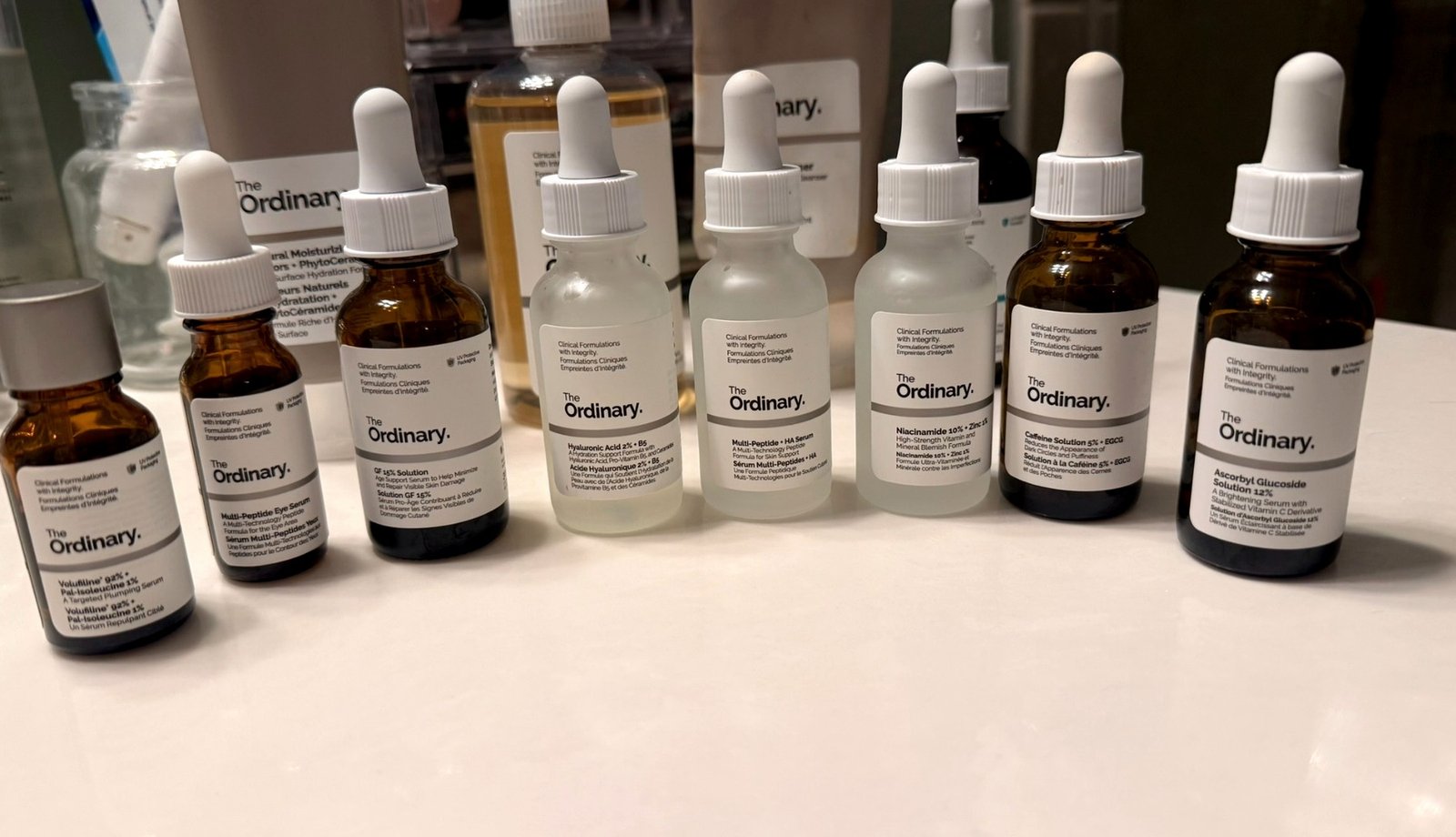
For the past several months, a number of products from The Ordinary have become regulars in my routine. I don’t use every product at once. I rotate them depending on what my skin needs and keep stronger treatments on separate days. Since using this routine, I’ve personally noticed a considerable improvement in the way my skin feels and looks. My skin texture looks smoother to me, and some of the discoloration I associate with past sun exposure appears lighter than it did before.
That is simply my own experience, not a promise that anyone else will get the same result. Skin is personal, and I’ve learned that more products do not automatically mean better results.
A quick note before trying anything new: Introduce new skincare products one at a time, patch test first, and follow the directions on the product label. Some active ingredients can increase sensitivity or irritation, especially when combined, so I keep stronger treatments on separate days and always use sunscreen during the day. If you have very sensitive skin, a skin condition, or ongoing irritation, it’s a good idea to check with a dermatologist before adding new actives to your routine.
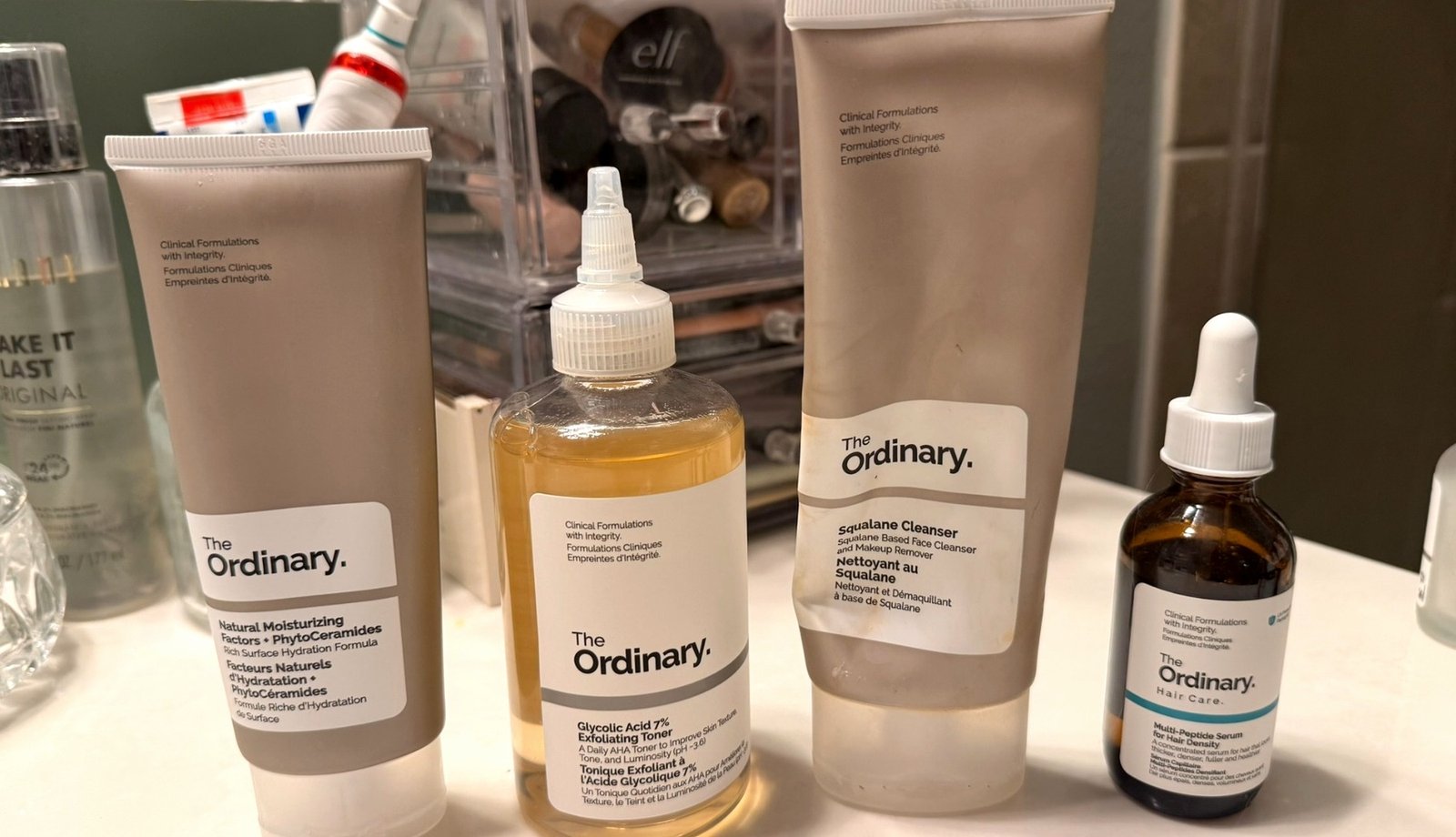
Squalane Cleanser
This is my basic cleansing step. I massage it onto dry skin, add water, and rinse before moving on to the rest of my routine. I use it morning or evening depending on what my skin needs that day.
Hyaluronic Acid 2% + B5
I use this when my skin needs extra hydration. I apply a few drops after cleansing and before moisturizer. It is one of the easiest products for me to work into either a morning or evening routine.
Niacinamide 10% + Zinc 1%
I rotate this in when I want a lightweight serum focused on the look of texture and overall balance. I use a few drops after cleansing and before moisturizer, either morning or evening.
Ascorbyl Glucoside Solution 12%
This is the vitamin C product in my routine. I use it when I’m focusing on brightness and uneven-looking tone. I apply it before moisturizer and always make sunscreen part of my daytime routine.
GF 15% Solution
I rotate this into my routine rather than using it with every other active at once. I use a few drops after cleansing on days when I’m keeping the rest of my routine fairly simple.
Multi-Peptide + HA Serum
This is another serum I alternate rather than layer with everything else. I use it after cleansing and before moisturizer when I want a peptide-focused routine.
Glycolic Acid 7% Exfoliating Toner
I use this more selectively, usually in the evening rather than every day. After cleansing, I apply it to dry skin and keep the rest of that routine simple. I do not use it on the same night as every other active in my cabinet because my face does not need to participate in a chemistry final.
Caffeine Solution 5% + EGCG
I use a small amount around the eye area when I want something lightweight, especially in the morning. I treat it as an eye-area step rather than another full-face serum.
Multi-Peptide Eye Serum
I alternate this with the caffeine serum instead of feeling as though I need both every single time. I use a small amount around the eye area before heavier creams.
Natural Moisturizing Factors + PhytoCeramides
This is the richer moisturizer in my routine and usually my final skincare step before sunscreen in the morning or the last step at night. I reach for it when my skin feels like it needs something more substantial.
Multi-Peptide Serum for Hair Density
This one is technically haircare rather than skincare, but it is part of what I actually use. I apply a few drops to a clean, dry scalp and massage it in, usually at night, without rinsing it out.
How I Rotate Everything
I don’t use all of these products in one routine. I rotate them, keeping exfoliating-acid nights, vitamin C, and peptide-focused routines separate. On simpler days I may just cleanse, use a hydrating serum, moisturize, and finish with sunscreen. That keeps the routine manageable and makes it much easier for me to tell how my skin is responding.
Where I Buy My Beauty Products
I buy most of my skincare and beauty products directly from the brand or from retailers I trust, especially Sephora and Ulta. I’m sharing these products because they’re genuinely part of my routine, not because I’m being paid to recommend them. If that ever changes and a link is an affiliate link, I’ll always make that clear.
A Final Thought
Skincare after 50 does not need to become more complicated. If anything, this stage of life has made me more interested in what actually works and much less impressed by an expensive bottle simply because someone put gold lettering on it.
Pay attention to how your skin feels, give it what it needs, and be willing to adjust your routine as the seasons change. Comfortable, healthy-looking skin is the goal. Everything else is just packaging.
.
Leave a Reply