
I like fall decorating best when it feels like a natural extension of the room instead of a complete seasonal makeover. And if you enjoy Halloween, it can be part of that too. Start with the warmer colors, textures, lighting, and florals that will carry you through fall, then layer in a few Halloween pieces for October.
That way, when Halloween is over, you do not have to start all over again. Take away the ghosts, skulls, or jack-o’-lanterns and the room still feels warm and seasonal because the fall foundation is already there.
How to Layer in Warmth and Texture
Texture is one of the easiest ways to make a room feel more substantial for fall because it changes how the space feels without requiring a major color overhaul. Smooth surfaces tend to read lighter and cooler, while woven, nubby, matte, and natural materials add visual weight and warmth.
Start by looking at what you already own. A linen pillow, woven basket, ceramic vase, wood bowl, or neutral throw may already have the texture you need. Instead of adding five new seasonal pieces, try layering two or three different materials together. For example, pair a soft throw with a woven basket and a matte ceramic vase. The contrast between those surfaces creates depth, even if everything stays within a quiet neutral palette.
I may earn a small commission from purchases made through this link, at no extra cost to you.
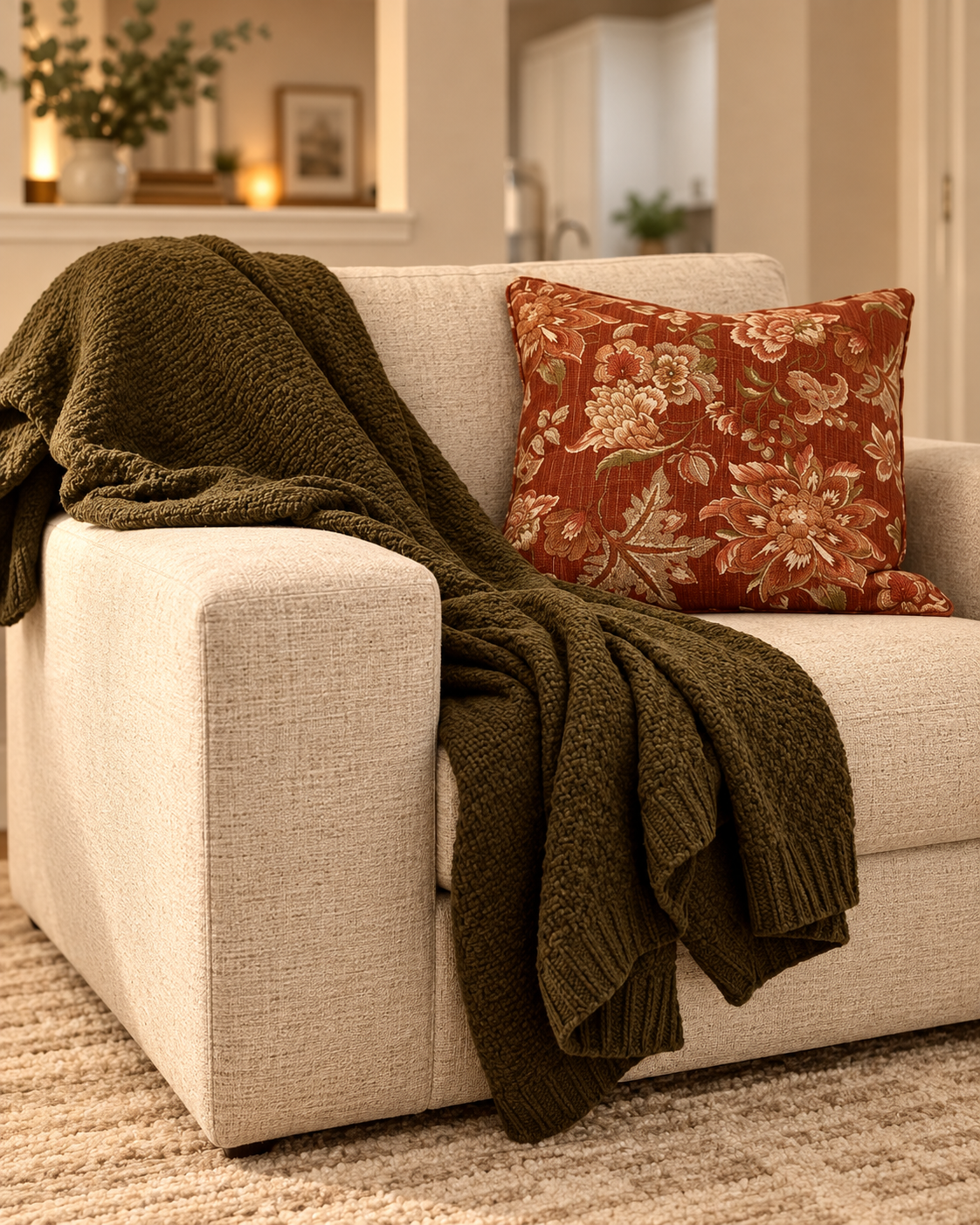
One of my favorite ways to add that kind of texture is with a chunky knit throw. I own this one and absolutely love it. It is soft, cuddly, warm, and gives me those Pottery Barn vibes without needing to completely redecorate the room.
If you want to bring in seasonal color, stick with softer, more muted shades instead of anything too bright or loud. Rust, camel, olive, tobacco, warm cream, and deep brown can suggest fall without turning the room orange. Even one of those shades repeated in two or three places can make the room feel more intentional.
The mistake to avoid is adding texture everywhere at once. Too many chunky throws, fuzzy pillows, woven baskets, and rustic accessories can quickly make a room feel busy and heavy. Choose a few areas where texture will have the most impact, such as the sofa, coffee table, dining table, or entryway, and let the rest of the room stay quiet.
How to Mix Halloween Into Your Fall Decor Without Overdoing It
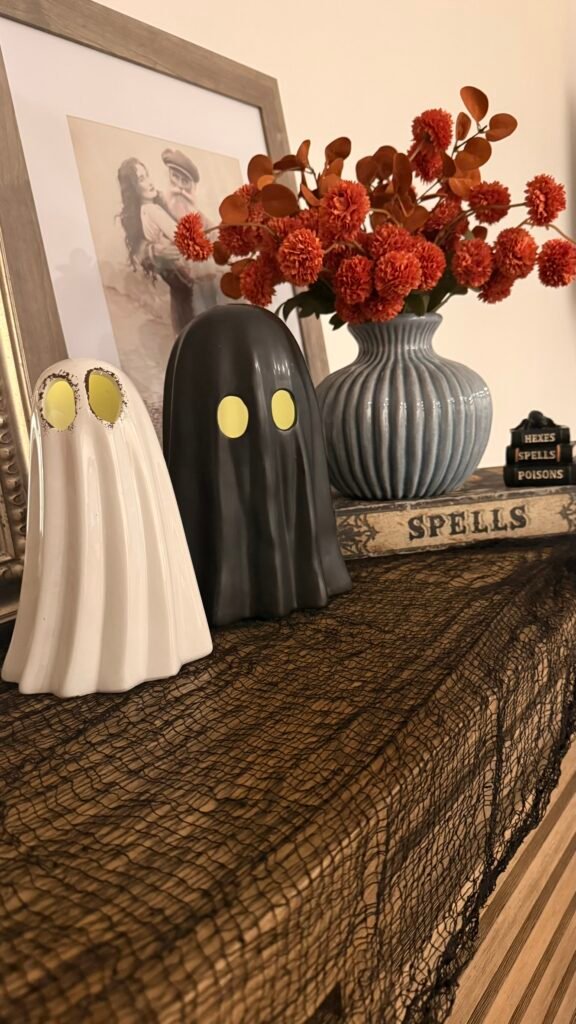
The difference between a room that feels thoughtfully decorated for fall and one that feels overly seasonal is usually pretty simple. The trick is to keep it simple and carry a few of the same colors and textures through the space. A few well-placed accents will make a stronger impression than filling every surface with something autumn-related.
Choose one or two seasonal elements and repeat them in small ways. That might mean using muted pumpkins in the entryway and on the dining table, or carrying the same warm brass finish from candleholders into a decorative bowl or lamp. Repeating a color, material, or shape gives the room a sense of continuity and makes even inexpensive pieces look more intentional.
Placement matters just as much as what you buy. Instead of scattering small decorations around the room, create a few focused moments: a styled tray on the coffee table, a simple arrangement on the buffet, or a cluster of candles and greenery on the dining table. Leaving some surfaces undecorated gives those seasonal moments more impact.
The common mistake is trying to make every corner announce the season. A few Halloween pieces mixed in with your regular fall decor can be fun and still feel pulled together, but you do not need ghosts, pumpkins, signs, and garlands on every surface. The best part is that once Halloween is over, you can simply remove those few pieces and leave everything else in place through the rest of fall.
How to Illuminate Your Space with Ambient Light
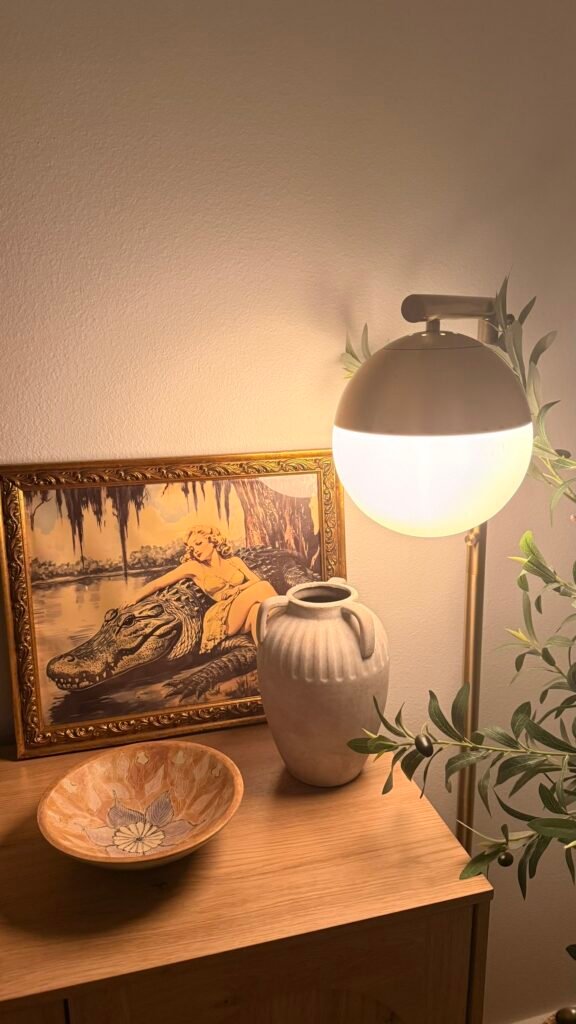
Ambient lighting is one of the most effective ways to change the feeling of a room for fall because it affects everything already in the space. Warm wood looks richer, textured fabrics become more noticeable, metallic finishes pick up a softer glow, and even an ordinary corner can feel more inviting when it is properly lit. The goal is not simply to make the room darker. It is to create layers of light at different heights, so the room feels warm and dimensional instead of flat.
Start by turning off the main overhead light and noticing where the room becomes dark. Those shadowy areas tell you where another light source may be useful. A table lamp beside the sofa, a floor lamp behind a reading chair, sconces near artwork, or a small lamp on a console can create separate pools of light throughout the room. When your eye moves naturally from one illuminated area to another, the entire space tends to feel more balanced.
Think of lighting in three layers: general light, task light, and accent light. General lighting gives you enough illumination to move comfortably through the room. Task lighting provides brighter light where you actually need it, such as beside a chair for reading or over a kitchen work surface. Accent lighting is the softer layer that creates atmosphere, such as a small lamp on a buffet, picture lights, sconces, candles, or lights tucked into shelving. Most comfortable rooms use a combination of all three rather than asking one ceiling fixture to do everything.
Choose the Right Bulb Temperature
The bulb itself matters almost as much as the lamp. For living rooms, bedrooms, and dining areas, bulbs in the 2200K–2700K range create a warm, inviting glow. Around 2700K gives you a classic warm white, while 2200K produces a softer, more amber light that works especially well for accent lamps and evening lighting. In kitchens or other spaces where you need slightly clearer visibility, 3000K can still feel warm without becoming too yellow.
I may earn a small commission from purchases made through this link, at no extra cost to you.
In my own living area, I use these 2200K amber LED bulbs in all four of my lamps. I love the warm glow they give the room without making it feel overly bright, and they have been one of the easiest ways to make the whole space feel softer in the evening.
One of the quickest ways to make a room feel visually unsettled is to mix very warm bulbs with cool white bulbs in the same space. If one lamp looks golden and the next one looks blue-white, your eye notices the difference even if you cannot immediately explain what feels wrong. Try to keep visible light sources within the same general color temperature.
Pay Attention to Where the Light Falls
Lamp placement matters. A beautiful lamp sitting in the wrong place will still leave the room feeling poorly lit. Beside a sofa or chair, the lower edge of the lampshade should generally be close to seated eye level so you receive useful light without staring directly at the bulb. A floor lamp can work particularly well behind a chair or in a corner that otherwise disappears after sunset.
Console tables, buffets, and entry tables are ideal places for smaller lamps because they add light at mid-level and soften large stretches of wall. In a dining room, the chandelier can provide the primary light while buffet lamps, sconces, or candles add a lower, more intimate layer.
And do not ignore dark corners. You do not need to brightly illuminate every inch of the room, but a completely black corner can make the space feel smaller. A floor lamp, uplight, or even a small shaded lamp can give that area just enough definition to visually expand the room.
Use Dimmers to Change the Mood, Not the Decor
A dimmer switch may be one of the least glamorous decorating purchases on earth, but it can do more for the atmosphere of a room than another seasonal accessory. Brighten the room when you are cleaning, reading, or entertaining, then lower the light in the evening when you want the room to feel softer.
If changing the wall switch is not practical, dimmable lamps or smart bulbs can accomplish much the same thing. The point is flexibility. A room should not have only two settings: operating room and cave.
Let Candles Be the Final Layer
Candles work best as accent lighting rather than the main source of illumination. Use them where their glow can reflect off nearby surfaces: on a dining table, grouped on a tray, along a mantel, or beside glass and metallic finishes.
Varying the height makes a candle arrangement feel more deliberate. For example, combine a pair of taper candles with a few lower votives rather than lining up five candles of exactly the same size. Flameless candles can work beautifully too, particularly inside lanterns or in areas where an open flame would be inconvenient.
The Lighting Mistake to Avoid
The most common problem is relying almost entirely on one bright ceiling fixture. It technically lights the room, but it also tends to flatten everything beneath it. Texture disappears, corners feel harsh, and the room loses the sense of depth that makes it comfortable.
Instead, aim for several smaller light sources spread through the room. You do not need to purchase them all at once. Start with the room you use most in the evening and add lighting where there is a genuine dark spot or functional need.
How to Bring Natural Elements Into Your Fall Decor
One of the simplest ways to make a room feel seasonal is to bring in something that looks as though it could have come from outside. Branches, leafy stems, dried grasses, seed pods, pinecones, and even bowls of seasonal fruit introduce the irregular shapes found in nature, which can soften rooms filled with straight furniture lines and polished surfaces.
And you do not necessarily need to buy them. Before heading to a store, look at what is available in your own yard or garden. A few clipped branches can be more interesting than a perfectly arranged bundle of commercial stems because their uneven shapes give an arrangement movement and character. Just make sure anything brought indoors is clean and free of insects. Apparently the spiders do not understand they weren’t invited to participate in the tablescape.
Think Bigger With Branches
The most common mistake with greenery is using stems that are too small for the vase or the furniture beneath them. On a long console or buffet, a tiny arrangement can disappear visually.
Instead, use fewer but taller branches and let them spread naturally. As a general guide, the completed arrangement can be roughly one-and-a-half to two times the height of the vase, depending on the shape of the branches and where the arrangement will sit.
Do not force every stem into perfect symmetry. Turn some branches outward, vary their height, and leave a little open space between them. That looseness is what keeps the arrangement from looking artificial.
Use the Room to Decide What Goes Where
Different surfaces call for different kinds of arrangements.
On a buffet or console, height works beautifully because you are usually viewing it from across the room. A tall vase of branches can create a focal point and help balance lamps, artwork, or a mirror.
On a coffee table, stay lower. A shallow bowl filled with pears, small pumpkins, pinecones, or clipped greenery adds a seasonal element without creating a leafy barricade between everyone sitting in the room.
For a dining table, keep anything used during meals low enough that people can comfortably see one another across the table. Taller branches can still work beautifully when the table is not being used, then be moved when you are entertaining.
Fresh, Dried, or Faux Can All Work
There is no decorating medal awarded for using only fresh greenery.
I may earn a small commission from purchases made through this link, at no extra cost to you.
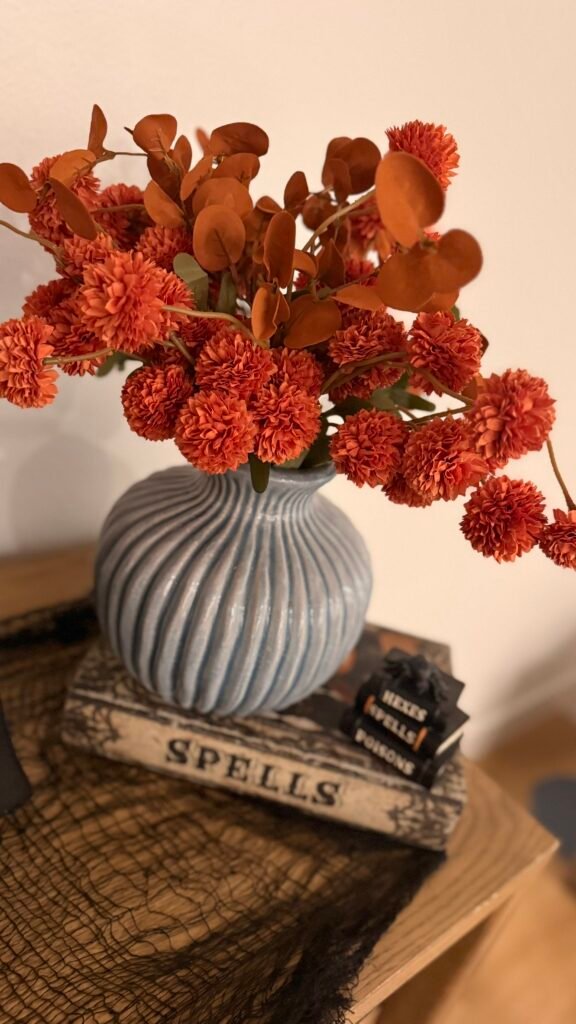
Fresh branches bring beautiful variation and movement, dried stems can add structure and last for months, and good faux greenery can be practical in areas where real plants will not survive. If you prefer faux florals, these muted artificial mum stems are a good example of the soft, seasonal color that works beautifully for fall without overwhelming the room.
With faux stems, the biggest giveaway is repetition. If every leaf is identical and facing exactly the same direction, bend the stems gently, rotate the leaves, and separate the branches before placing them in the vase. Sometimes the difference between convincing faux greenery and something that looks plastic is simply taking five minutes to reshape it.
Let One Natural Element Be Enough
You do not need pumpkins, branches, leaves, pinecones, acorns, wheat, and berries all occupying the same three feet of furniture.
Choose one dominant natural element and let the others play supporting roles. Tall branches might be the feature on a buffet, with only a few small pumpkins nearby. A bowl of pears might be enough on a kitchen island. A simple vase of olive branches may be all a coffee table needs.
That little bit of restraint is what makes the room feel collected rather than decorated for a theme.
Let your home ease into the season the way you do. Slowly, comfortably, and on purpose. A few thoughtful touches are enough. You don’t need to rush or overdo it.
A Few Thoughtful Finds for Fall
Affiliate note: This section contains Amazon affiliate links. If you purchase through them, I may earn a small commission at no extra cost to you.


Leave a Reply